


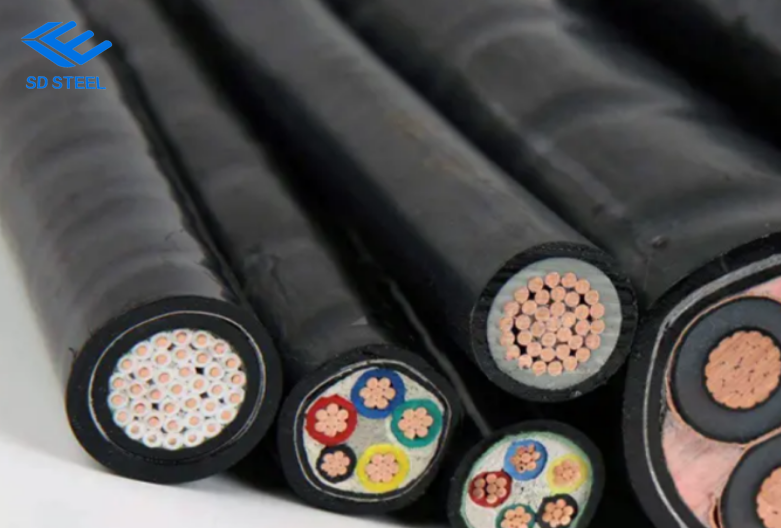
The difference between power cables and control cables:
Power cables are used in the main lines of power systems to transmit and distribute large amounts of electrical energy, while control cables transmit electrical energy directly from the distribution points of the power system to the power supply lines and appliances of various electrical devices.
2. The rated voltage of power cables is generally 0.6/1kV and above, while the rated voltage of control cables is generally 450/750V and below.
3. When producing power cables and control cables of the same specifications, the insulation and sheath thickness of power cables is thicker than that of control cables.
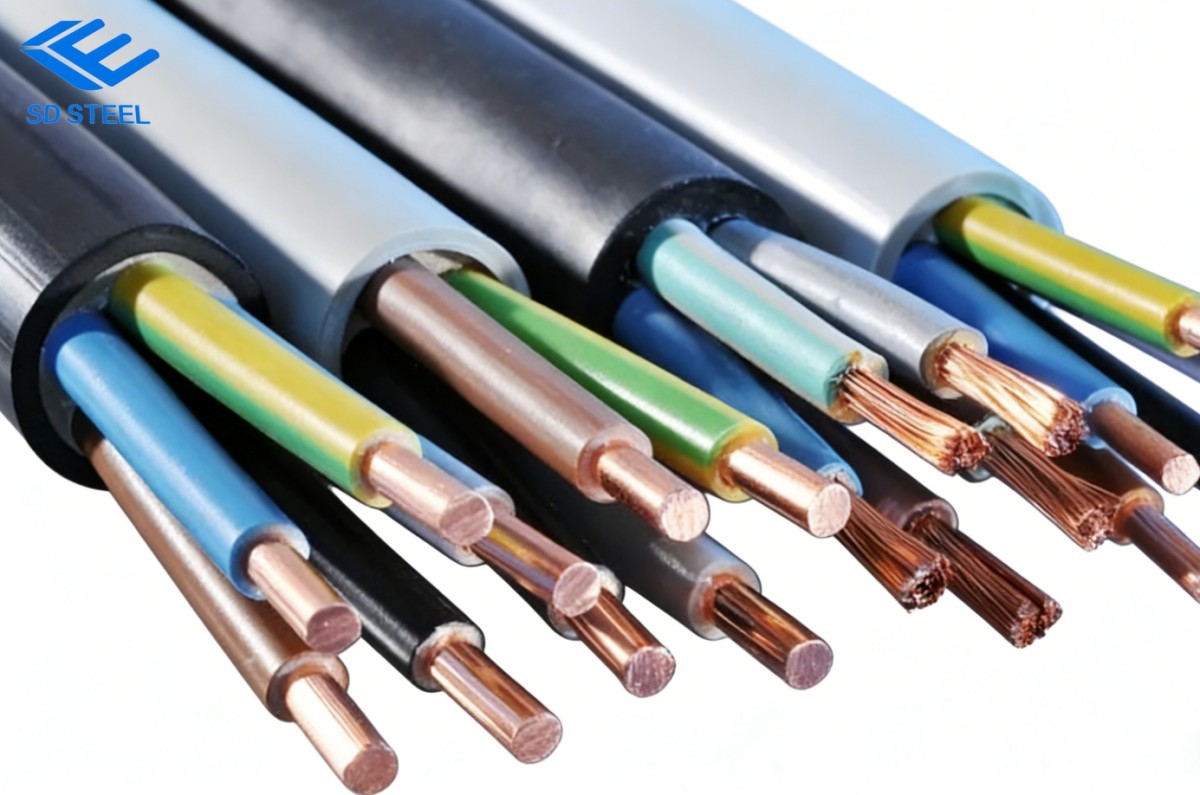
The specific differences between power cables and control cables are as follows:
1. First, power cables belong to Class II power cables, while control cables belong to Class III electrical equipment cables;
2. The standard for power cables is GB/T 12706, and the standard for control cables is GB/T 9330;
3. The insulation cores of low-voltage power cables are generally color-coded, while those of control cables are generally black or white;
4. Power cables are mainly used for transmitting electricity and generally have a larger cross-section, while the cross-section of control cables generally does not exceed 10 square millimeters;
5. Due to the above reasons, power cables can generally be made larger, up to 500 square millimeters (the range that conventional manufacturers can produce). The cross-section is generally smaller, with a maximum of generally not exceeding 10 square millimeters;
6. In terms of the number of cores, power cables typically have 5 cores, while control cables are used to transmit control signals and have more cores.
7. Network transmission medium—Among the three types of cables in network hardware, there is another type that cannot be ignored: network cables, which are commonly referred to as network cables. Currently, the most common types of network cables are thin coaxial cables, thick coaxial cables, twisted-pair cables, and fiber optic cables;
The concept of coaxial cable:
Coaxial cable is a transmission medium familiar to many. It is a cable with a central copper conductor wrapped in multiple layers of insulated wire. Its biggest advantages are good anti-interference ability, stable data transmission, and affordability. It was also very cheap, so it was once widely used, for example, in CCTV lines;
2. However, coaxial cables were used extensively in the past, mainly because the bus network structure composed of coaxial cables was low in cost. However, the failure of a single cable could paralyze the entire network and make it difficult to maintain, which is its biggest drawback.
3. Coaxial cables used in Ethernet applications are mainly divided into thick coaxial cables (10Base5) and thin coaxial cables (10Base2).
4. Thick coaxial cables are not used much anymore, but thin coaxial cables still have some market.
Okay, that concludes the explanation of the differences between power cables and control cables. Hopefully, this information will help you use electrical wires and cables correctly.
Latest News
- What are the five categories of wires and cables?
- Household Wiring Guide
- What Are Solar Panels? Types, Selection, and Buying Guide
- Power Transformers: How Do They Work and What Are Their Uses?
- How to Select the Appropriate Wire and Cable Model and Cross-Section
- What constitutes a box-type substation or a box-type transformer? What are box-type substations, and what are their applications?
Send Us A Message
Send Your Inquiry
We welcome your cooperation and we will develop with you.