


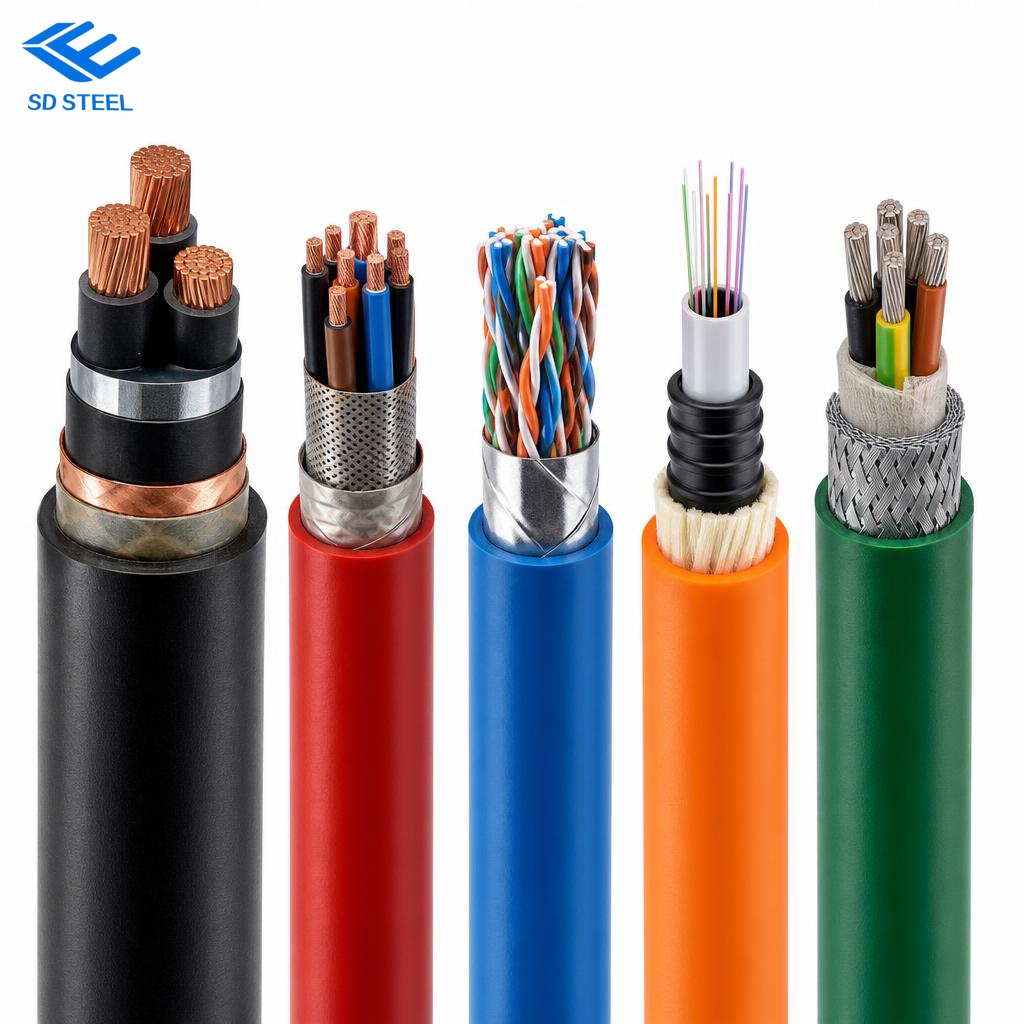
Bare Wire and Bare Conductor
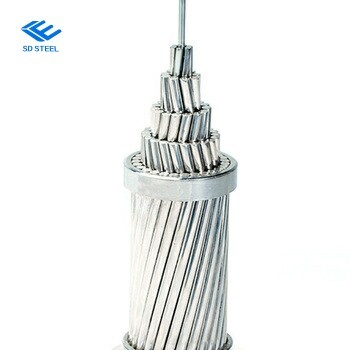
The primary characteristics of this product are: it consists of pure conductive metal materials—devoid of insulation or sheathing—such as steel-reinforced aluminum conductors, copper-aluminum busbars for medical applications, and power locomotive cables. The manufacturing process primarily involves mechanical processing techniques, including smelting, casting, welding, heat treatment, and stranding (including compacted stranding). These products are predominantly utilized in suburban and rural areas, as well as in high-voltage switchgear assemblies.
2. Wires and Cables
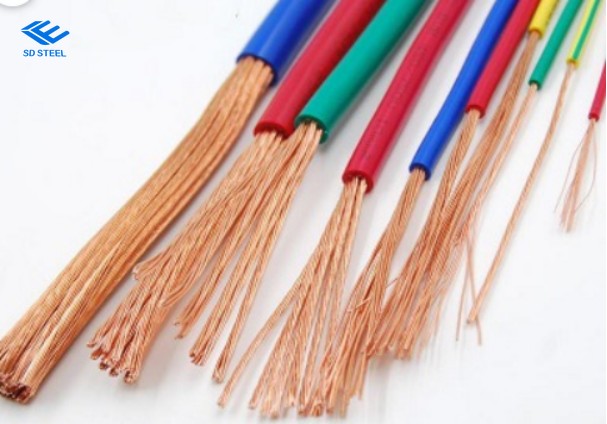
The advantages of wires and cables lie in the extrusion (or wrapping) of a protective sheath around the electrical conductor—such as in air-insulated cables—or in the assembly of multi-core stranded bundles (configured to accommodate power system components such as phase lines, neutral lines, and ground lines)—such as in air-insulated cables comprising two or more cores—or, alternatively, in the application of a protective jacket, as seen in plastic or rubber-insulated cables.
The primary manufacturing processes include wire drawing, annealing and heat treatment, stranding, insulation extrusion (or wrapping), cabling, armoring, and sheath extrusion; the specific sequence and combination of these processes vary depending on the particular product being manufactured. These products are primarily utilized within power generation, distribution, transmission, substation, and supply systems for the transmission of electrical energy—specifically involving high currents (ranging from tens of amperes to several thousand amperes) and high operating voltages (ranging from 380V to 500kV and above).
3. Overhead Insulated Cables
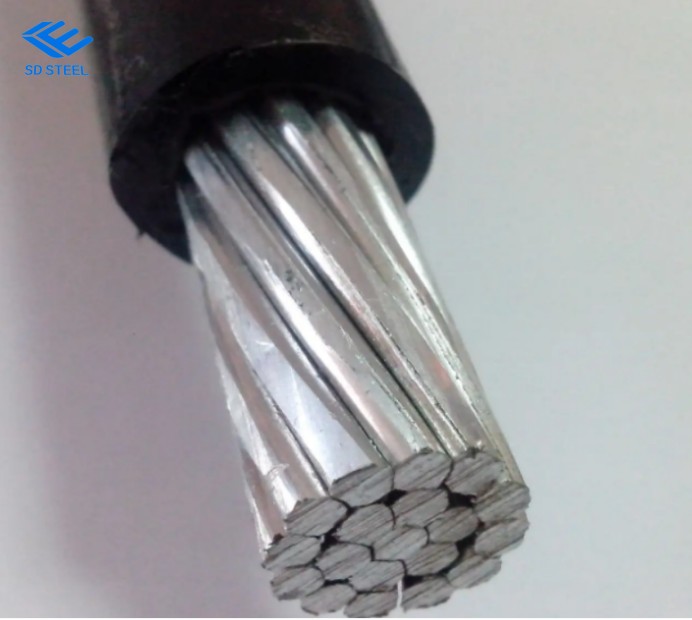
A defining characteristic of overhead cables is the absence of a protective sheath. The following serves to correct three common misconceptions regarding this type of cable:
(1) Conductors are not limited to aluminum; they also include copper conductors (models JKYJ and JKV) and aluminum alloy conductors (model JKLHYJ). Additionally, there are steel-reinforced aluminum stranded overhead cables (model JKLGY).
(2) They are not exclusively single-core; while single-core configurations are indeed the most common, it is also possible to twist multiple conductors together to form a bundled cable.
(3) The voltage rating for overhead cables encompasses levels of 35 kV and below, rather than being restricted solely to 1 kV and 10 kV.
4. Control Line
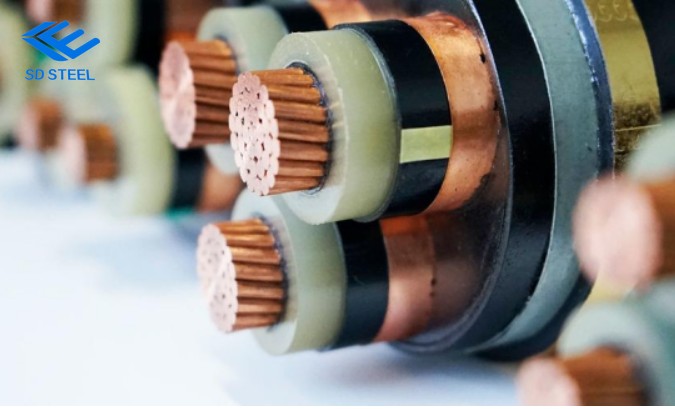
The structure of this type of cable is similar to that of power cables; however, it is characterized by having only copper cores—aluminum-core versions do not exist—and features smaller conductor cross-sections and a higher number of cores.
This cable model is suitable for AC rated voltages of 450/750V and below, and is utilized for the control of individual machines or unit equipment in power stations, substations, mines, petrochemical plants, and similar facilities. If enhanced resistance to internal and external signal interference is required, a metal shielding layer can be provided.
Common models include KVV, KYJV, KYJV22, KVV22, and KVVP. The model designations are interpreted as follows: "K" stands for Control Cable; "V" for PVC (Polyvinyl Chloride) Insulation; "YJ" for XLPE (Cross-linked Polyethylene) Insulation; "V" for PVC Sheath; and "P" for Copper Wire Shielding.
Regarding the shielding layer, the standard KVVP model features copper wire shielding. If copper tape shielding is used, the model is designated as KVVP2; if aluminum-plastic composite tape shielding is used, it is designated as KVVP3. Shielding layers made of different materials each possess distinct characteristics and functions.
These cables are primarily used in residential wiring and electrical distribution cabinets. Friends who own hardware stores are particularly familiar with them. BV wire is what is commonly referred to as general-purpose wiring. Models in this category include BV, BLV, BVR, RVV, RVVP, BVVB, and others.
Regarding the letter "B": this character frequently appears in the model designations of wires and cables. Its meaning varies depending on its specific position within the designation.
Taking BVVB as an example: the initial "B" signifies "Wiring" (or fixed installation wiring), indicating the cable's application category—much in the same way that "JK" denotes overhead cables and "K" denotes control cables. The final "B" in the designation indicates a "Flat" profile, representing a special structural requirement applied to the cable.
The full interpretation of BVVB is: Copper-core, PVC-insulated, PVC-sheathed, Flat Cable.
5. Special Cables
Specialty cables are cables endowed with specific functions; they primarily include flame-retardant cables (ZR), low-smoke zero-halogen cables (WDZ), fire-resistant cables (NH), explosion-proof cables (FB), anti-rodent and anti-termite cables (FS), and waterproof cables (ZS), among others.
Flame-retardant cables (ZR) and low-smoke zero-halogen cables (WDZ) are primarily suited for critical power and control systems. Should the circuit encounter a fire, these cables will burn only to a limited extent under the influence of external flames; furthermore, they generate minimal smoke, and the smoke contains very low levels of harmful gases (halogens).
Once the external fire source is removed, flame propagation remains confined to a limited area, and any residual flames or smoldering will self-extinguish within a finite period. This serves to minimize damage to both human life and property caused by the fire. These types of cables are predominantly deployed in critical environments such as petrochemical plants, power generation facilities, metallurgical complexes, high-rise buildings, and densely populated areas.
Fire-resistant cables (N) are primarily designed for exceptionally critical power and control systems. In the event of a circuit fire, these cables can withstand high temperatures—ranging from 750°C to 1000°C—for a duration exceeding 90 minutes, thereby ensuring the continued safe transmission of power and providing ample time for firefighting and disaster mitigation efforts.
In response to specific operational requirements, a continuous stream of new products has emerged, including fire-resistant cables, flame-retardant cables, low-smoke zero-halogen/low-smoke low-halogen cables, anti-termite/anti-rodent cables, oil-resistant/cold-resistant/heat-resistant/abrasion-resistant cables, and irradiation cross-linked cables, among others.
Latest News
- What are the five categories of wires and cables?
- Household Wiring Guide
- What Are Solar Panels? Types, Selection, and Buying Guide
- Power Transformers: How Do They Work and What Are Their Uses?
- How to Select the Appropriate Wire and Cable Model and Cross-Section
- What constitutes a box-type substation or a box-type transformer? What are box-type substations, and what are their applications?
Send Us A Message
Send Your Inquiry
We welcome your cooperation and we will develop with you.