


News
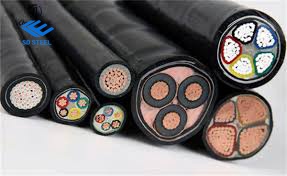
Applications of power cables
Power cables are commonly used in urban underground power grids, power plant lead-out lines, internal power supply for industrial and mining enterprises, and underwater power transmission lines across rivers and seas.
Main classifications of power cables
According to voltage level: Power cables can be divided into medium and low voltage cables (35 kV and below), high voltage cables (above 110 kV), ultra-high voltage cables (275-800 kV), and extra-high voltage cables (1000 kV and above). They can also be classified by current system into AC cables and DC cables. According to insulation material: 1. Oil-impregnated paper insulated power cables: Power cables with oil-impregnated paper insulation. They have the longest history of application. They are safe, reliable, have a long service life, and are inexpensive. The main disadvantage is that laying them is limited by elevation differences. Since the development of non-drip impregnated paper insulation, the elevation difference limitation problem has been solved, allowing oil-impregnated paper insulated cables to continue to be widely used. 2. Plastic insulated power cables: Power cables with extruded plastic insulation. Commonly used plastics include polyvinyl chloride, polyethylene, and cross-linked polyethylene. Plastic cables have a simple structure, are easy to manufacture and process, are lightweight, and are easy to lay and install, without being limited by elevation differences. Therefore, they are widely used as medium and low voltage cables and are trending towards replacing viscous impregnated paper cables. Its biggest drawback is the existence of dendritic breakdown, which limits its use at higher voltages. 3. Rubber-insulated power cables: The insulation layer is made of rubber with various additives, fully mixed and extruded onto the conductive core, then vulcanized at high temperature. It is soft and elastic, suitable for applications with frequent movement and small bending radii. Commonly used insulating rubber materials include natural rubber-styrene-butadiene rubber mixtures, ethylene propylene rubber, butyl rubber, etc. Classified by voltage level: 1. Low-voltage cables: Suitable for fixed installation on AC 50Hz transmission and distribution lines with a rated voltage of 3kV and below for transmitting electrical energy. 2. Medium and low-voltage cables: (generally 35KV and below): Polyvinyl chloride insulated cables, polyethylene insulated cables, cross-linked polyethylene insulated cables, etc. 3. High-voltage cables: (generally 110KV and above): Polyethylene cables and cross-linked polyethylene insulated cables, etc. 4. Ultra-high-voltage cables: (275~800KV). 5. Extra-high-voltage cables: (1000KV and above).
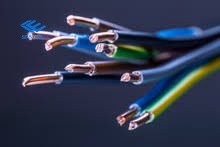
Basic structure of power cables
The basic structure of a power cable consists of four parts: the conductor, the insulation layer, the shielding layer, and the protective layer. 1. Conductor: The conductor is the conductive part of the power cable, used to transmit electrical energy, and is the main part of the cable. 2. Insulation Layer: The insulation layer electrically isolates the conductor from the ground and from conductors of different phases, ensuring the transmission of electrical energy. It is an indispensable component of the power cable structure. 3. Shielding Layer: Power cables of 15KV and above generally have a conductor shielding layer and an insulation shielding layer. 4. Protective Layer: The protective layer protects the power cable from the intrusion of external impurities and moisture, and prevents direct damage from external forces.
China's sustained and rapid economic growth has provided a huge market space for cable products. The strong allure of the Chinese market has drawn global attention. In just a few decades since the reform and opening up, the massive production capacity of China's cable manufacturing industry has impressed the world. The wire and cable industry is China's second largest industry after the automotive industry, with product variety satisfaction and domestic market share both exceeding 90%. Globally, China's total wire and cable output value has surpassed that of the United States, making it the world's largest wire and cable producer. Along with the rapid development of China's wire and cable industry, the number of new enterprises is constantly increasing, and the overall technological level of the industry has been greatly improved. The massive production capacity of China's cable manufacturing industry has impressed the world. With the continuous expansion of China's power industry, data communication industry, urban rail transit industry, automotive industry, and shipbuilding industry, the demand for wires and cables will also grow rapidly, indicating that the wire and cable industry still has enormous development potential in the future.
Latest News
- What are the five categories of wires and cables?
- Household Wiring Guide
- What Are Solar Panels? Types, Selection, and Buying Guide
- Power Transformers: How Do They Work and What Are Their Uses?
- How to Select the Appropriate Wire and Cable Model and Cross-Section
- What constitutes a box-type substation or a box-type transformer? What are box-type substations, and what are their applications?
Send Us A Message
Send Your Inquiry
We welcome your cooperation and we will develop with you.