


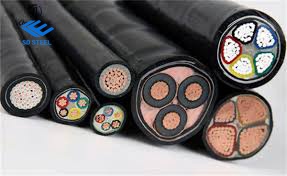
Low-Voltage Cable Structure
The structure of a low-voltage cable consists of three main components: the core, the insulation layer, and the protective layer.
The core serves to conduct electric current and is typically composed of multiple strands of copper or aluminum wire.
Low-voltage cables are available in various configurations, including single-core, two-core, three-core, four-core, and other types.
Two-core cables are utilized for single-phase lines; three-core cables are used for three-phase, three-wire systems; and four-core cables are used for three-phase, four-wire systems. Single-core cables may be applied to either single-phase or three-phase lines, depending on specific requirements.
Commonly used cross-sectional areas for low-voltage cable cores include 10, 16, 25, 35, 50, 70, 95, 120, 150, 185, and 240 mm², among others.
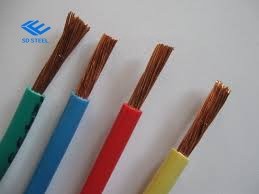
Insulation Layer
Insulating material within a cable that serves a specific function: to withstand voltage.
Insulated cables are classified into two types: core insulation and tape insulation.
The insulating material wrapped around an individual wire conductor is referred to as core insulation.
In multi-core cables—where individual cores are bundled together and subsequently covered with insulation—this collective insulation is also termed core insulation.
It functions distinctly from the protective layers to establish a reliable insulating barrier.
The insulation layer is typically composed of oil-impregnated paper, plastics, rubber, etc.
1. Paper-Insulated Cables: These cables utilize impregnated paper as their insulating medium and are commonly referred to as "paper cables."
Based on the specific type of paper and impregnation method used, they can be categorized as follows:
① Oil-impregnated paper-insulated cables.
② Dry-type insulated cables.
③ Non-draining (non-dripping) cables.
2. Cables with Extruded Thermoplastic or Cross-linked Insulation: These are commonly known as "plastic cables" and are widely utilized.
Plastic cables can be broadly classified into three types: PVC cables, polyethylene cables, and cross-linked polyethylene (XLPE) cables.
Cables utilizing natural rubber, butyl rubber, or ethylene-propylene rubber as their insulating material are referred to as "rubber cables."
For low-voltage cables with a voltage rating of 1 kV, both paper-insulated cables and plastic cables may be used, though plastic cables are more prevalent. For low-voltage cables rated at 0.5 kV, rubber cables are the more common choice.
Protective Layer
A layer of either metallic or non-metallic material covering the exterior of a cable.
The protective layer serves to shield the insulation during transportation, installation, and operation against external damage and moisture ingress.
Protective Layer
A layer of either metallic or non-metallic material covering the exterior of a cable.
The protective layer serves to shield the insulation during transportation, installation, and operation against external damage and moisture ingress.
1. Protective Layers for Paper-Insulated Cables
The protective structure of paper-insulated cables consists of two main parts: an inner sheath and an outer jacket.
The inner sheath is extruded directly over the insulation layer; in addition to shielding the insulating material from moisture, it serves to prevent the leakage of insulating oil and possesses a certain degree of mechanical strength.
Inner sheaths typically fall into one of three categories: lead sheaths, aluminum sheaths, or PVC sheaths.
The outer jacket is designed to protect the inner sheath, enhance the cable's resistance to external mechanical forces, and prevent corrosion.
The outer jacket assembly comprises an inner bedding layer, a metal armor layer, and an outer covering.
The inner bedding layer protects the metal sheath from potential damage caused by the metal armor layer and facilitates the integration of anti-corrosion measures.
The metal armor layer provides resistance against external mechanical forces, while the outer covering protects the metal armor itself from external corrosion.
2. Plastic Cable Protective Layer
Typically, a polyvinyl chloride (PVC) sheath is applied over the plastic insulation layer.
3. Rubber Cable Protective Layers
The protective layers for rubber cables are divided into an inner sheath and an outer sheath.
The inner sheath consists of three types: a PVC sheath, a neoprene sheath (non-flame-retardant rubber), and a lead sheath.
The outer sheath is classified into three types: steel tape armor, a rubber sheath, and a plastic sheath.
Low-Voltage Cable Selection
Cable selection primarily involves choosing the cable type and determining the cable cross-section.
Selection of Cable Type
The selection of power cable types should be determined based on environmental conditions, installation methods, specific requirements of power equipment, and other relevant factors; generally, the following principles should be observed:
1. In general environments and locations suitable for their use, aluminum-core cables may be selected.
However, in areas subject to severe vibration, within specialized structures, or in locations with specific technical requirements, copper-core cables should be utilized.
2. For buried cables, armored cables with an outer sheath are typically employed.
In locations where there is no risk of mechanical damage, plastic-sheathed cables or lead-sheathed (or aluminum-sheathed) cables with an outer protective covering may also be used.
3. In environments subject to chemical corrosion or soil corrosion caused by stray currents, the use of buried cables should be avoided whenever possible.
If burial is unavoidable, corrosion-resistant cable types must be selected.
4. For cables installed within conduits or cable ducts, plastic-sheathed cables are typically used; unarmored cables may also be utilized.
5. For cables installed in cable trenches or tunnels, cables with flammable or flame-propagating outer sheaths should not be used.
Typically, unarmored cables, plastic-sheathed cables, or unarmored aluminum-sheathed cables are selected for these applications.
6. When cables are installed in locations with significant elevation differences, it is appropriate to use plastic-insulated cables, non-draining cables, or dry-type cables.
Cross-Section Selection
The cross-section of the cable should be selected based on the following four conditions:
① Selection based on thermal generation conditions.
② Selection based on permissible voltage drop.
③ Selection based on mechanical strength requirements.
④ Selection based on line protection (equipment) requirements.
Low-Voltage Cable Types
Low-Voltage ABC Cables
LV ABC cables are designed for use as overhead power lines and service entrance cables, with an AC voltage rating of 1 kV or less. They offer reduced installation, maintenance, and operational costs, resulting in greater economic efficiency while providing enhanced safety and reliability.
Low-Voltage Cables
These cables are primarily utilized in environments where high power supply reliability is critical—such as areas exposed to corrosive gases, or locations presenting flammable, explosive, or similar hazards—and where the installation of standard low-voltage overhead lines or insulated overhead lines is deemed unsuitable.
Latest News
- What are the five categories of wires and cables?
- Household Wiring Guide
- What Are Solar Panels? Types, Selection, and Buying Guide
- Power Transformers: How Do They Work and What Are Their Uses?
- How to Select the Appropriate Wire and Cable Model and Cross-Section
- What constitutes a box-type substation or a box-type transformer? What are box-type substations, and what are their applications?
Send Us A Message
Send Your Inquiry
We welcome your cooperation and we will develop with you.