


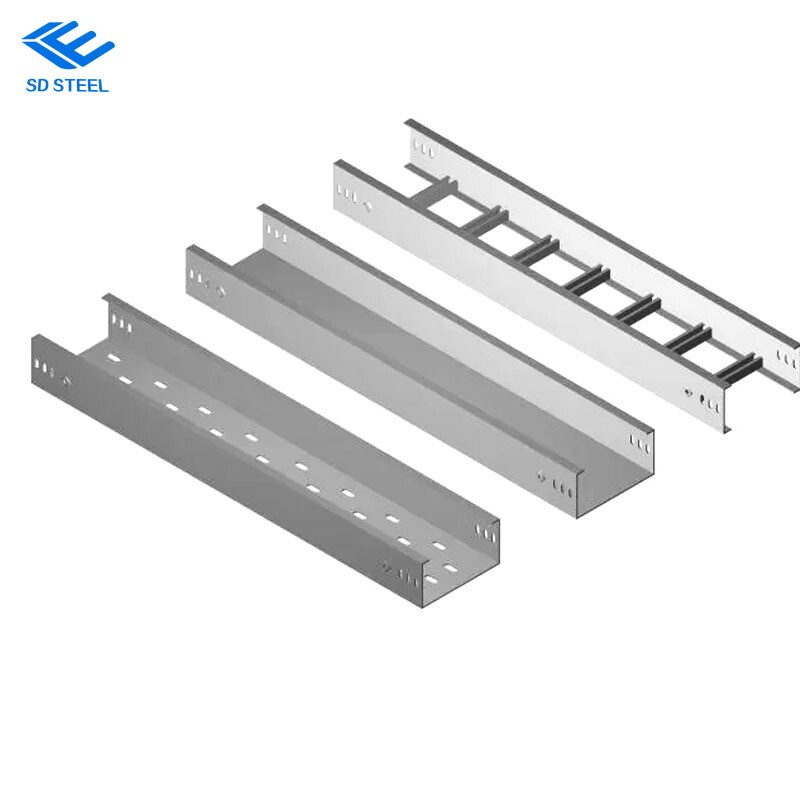
Advantages of Protective Coatings on Steel Surfaces
Hot-dip galvanizing
Product Description: Hot-dip galvanizing is a technique involving the application of a zinc coating over the entire surface of a cable tray, which helps protect it from adverse environmental effects. Consequently, the cable tray possesses rust-proof and wear-resistant properties.
application:
The optimal product for use in harsh acidic environments.
Essential for large-scale projects requiring robust structural integrity: electrical systems for drilling rigs, cable installations, shopping malls, factories, and similar facilities.
advantage:
Cable trays coated with a layer of zinc are capable of withstanding acidic environments, thereby minimizing oxidation, abrasion, and rust. Consequently, this enhances both the aesthetic appeal and the service life of the product.
In the case of hot-dip galvanized cable trays, the heating process results in the formation of a distinctive, aesthetically pleasing surface pattern.
During the hot-dip galvanizing process, the entire product is immersed in a zinc bath, ensuring that the zinc coating rapidly and completely covers the entire surface. Production facilities are capable of processing multiple products simultaneously—thereby reducing processing times—making this method particularly well-suited for products with complex structural designs.
Disadvantages: The price of hot-dip galvanized cable trays is consistently higher than that of other products. The reason for this lies in the high production investment costs—specifically, expenses related to factory facilities, galvanizing tanks, labor, wastewater treatment systems, and similar factors.
2. Electrostatic Coating
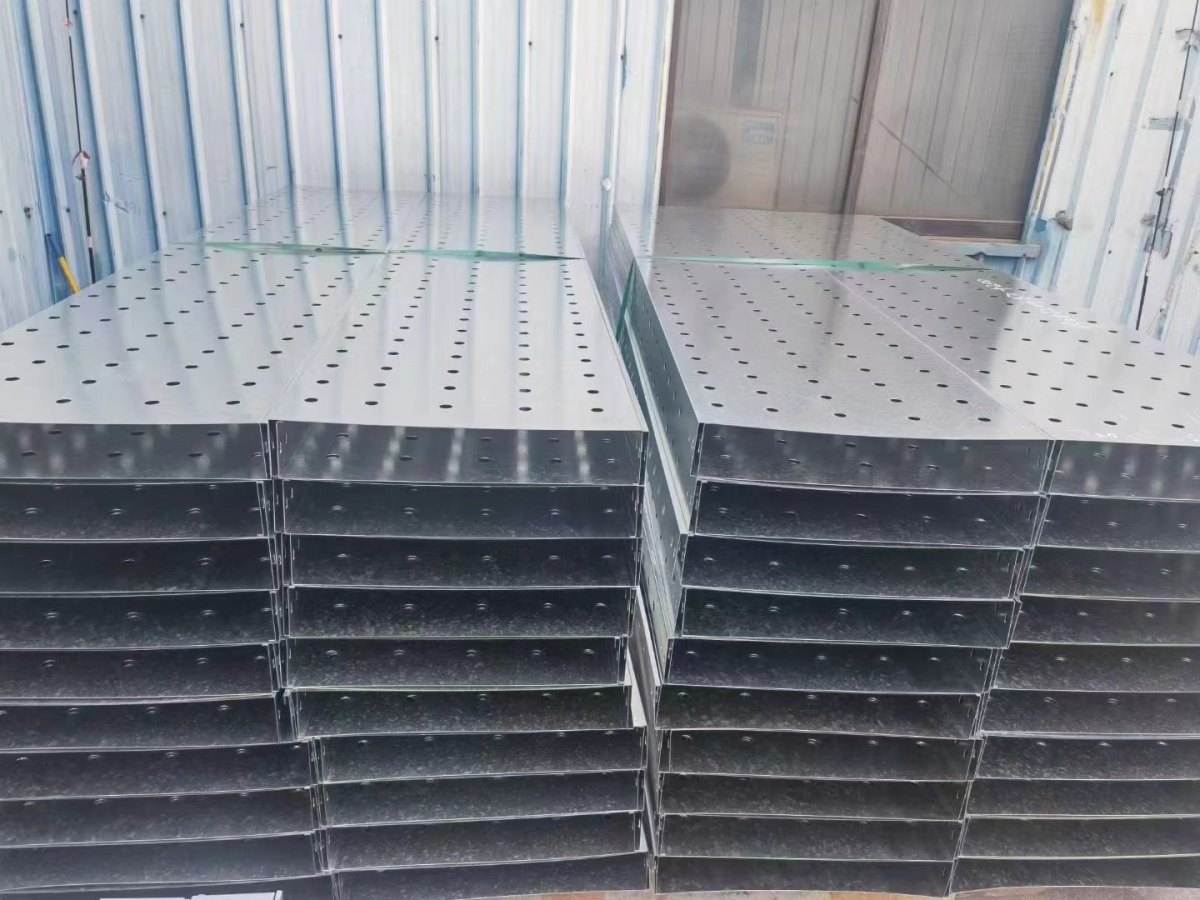
Product Description: Electrostatic-Coated Cable Trays feature a layer of electrostatically applied paint applied prior to market release. This electrostatic coating provides insulating properties, ensuring maximum safety for both users and electrical installations.
Applications: Electrostatic-coated cable trays are suitable for use across all mechanical and construction sectors, and are widely utilized in residential apartment complexes and hydroelectric power plants.
advantage:
Cable trays featuring an electrostatic coating boast an aesthetically pleasing design and a high-quality finish; they exhibit excellent resistance to warping and possess robust load-bearing capabilities.
Thanks to the application of a flame-retardant electrostatic layer, users can rest assured that their wires and cables are afforded the utmost protection in the event of an emergency. This is widely regarded as a standout advantage of this type of cable tray.
Furthermore, they are more cost-effective than their hot-dip galvanized counterparts.
Disadvantages: Unsuitable for environments with high humidity, acidic conditions, or excessive dust.
3. Electro-galvanizing
Product Description: Electrolytically galvanized cable trays utilize an electrolytic deposition process to coat the surface of the tray with a layer of deposited metal, thereby providing corrosion and rust protection.
Applications: Electrolytically galvanized cable trays are commonly used in outdoor projects or in work environments where metal is prone to corrosion and rusting.
advantage:
Electro-galvanized cable trays possess rust-resistant properties, making them suitable for outdoor environments and capable of withstanding natural impact forces.
Their surfaces are smooth, glossy, and uniform—rendering them more aesthetically pleasing than hot-dip galvanized cable trays.
They exhibit high corrosion resistance and are suitable for use in corrosive environments.
They are more affordable than the hot-dip galvanized variety.
They allow for rapid processing.
shortcoming:
Limited color options.
Not suitable for use in marine salt environments.
Latest News
- What are the five categories of wires and cables?
- Household Wiring Guide
- What Are Solar Panels? Types, Selection, and Buying Guide
- Power Transformers: How Do They Work and What Are Their Uses?
- How to Select the Appropriate Wire and Cable Model and Cross-Section
- What constitutes a box-type substation or a box-type transformer? What are box-type substations, and what are their applications?
Send Us A Message
Send Your Inquiry
We welcome your cooperation and we will develop with you.